Logo Design vs. Complete Brand Identity: What Growing Businesses Actually Need
A standalone logo is not a brand. Discover why modern enterprises require cohesive brand architecture—typography hierarchies, color systems, grid rules, and packaging die-lines—to establish market authority.
Lucie Creatives Brand Design Guild
Creative Direction & Identity Systems

Executive Summary & Key Findings
- A logo is merely a signature mark; brand identity is the complete visual and typographic vocabulary that surrounds it.
- Without systematic typographic scales and color governance, internal teams and regional agencies inevitably dilute brand consistency.
- A premium brand identity allows businesses to command 2x–5x price premiums by signaling institutional prestige and design rigor.
- True identity design accounts for physical packaging die-lines, digital UI dark modes, OOH billboards, and social media templates.
The Isolated Logo Fallacy
Why a ₹5,000 Logo Mark Fails to Move the Commercial Needle
One of the most frequent strategic mistakes early-stage founders and growing regional enterprises make is contracting a designer solely for a 'logo'. They receive a vectorized icon, save it in a Google Drive folder, and assume their branding task is finished.
Three months later, the business looks disjointed. Their website uses system fonts that clash with their packaging; their social media team generates marketing graphics with random Canva gradients; and their investor pitch decks feel amateurish. The problem was never the quality of the icon—it was the absence of a comprehensive Brand Identity System.
A logo in isolation has zero commercial leverage. It only acquires value through the disciplined, repetitive, and cohesive visual language that contextualizes it across consumer touchpoints.
The Anatomy of a Brand Identity System
The Five Core Pillars of Modern Visual Governance
A production-grade brand identity system is an engineered visual infrastructure consisting of five interdependent layers:
1. Typographic Architecture: Primary display typefaces for commanding headlines, legible secondary sans-serifs for body copy, and strict proportional scale matrices across mobile and desktop viewports.
2. Chromatic System: Curated primary, secondary, and neutral color tokens mapped into precise HSL and HEX values for digital screens, paired with exact Pantone spot inks and CMYK formulas for physical printing.
3. Grid & Compositional Rules: Mathematical bounding boxes, margin proportions, negative space rules, and photographic alignment guidelines that prevent haphazard layout execution.
4. Graphic Elements & Vector Glyphs: Secondary monogram seals, bespoke iconography, geometric textures, and directional framing devices.
5. Tone of Voice & Microcopy Standards: Clear editorial guidelines specifying the brand's rhetorical stance, vocabulary constraints, and customer communication cadence.
How Visual Rigor Commands Premium Pricing
The Economic Psychology of Aesthetic Prestige
Brand identity is not an artistic indulgence; it is a financial lever. Consumers and enterprise buyers do not evaluate products in an objective vacuum—they rely on visual signaling to infer quality, reliability, and social prestige.
When a luxury skincare line, fine jewelry house, or enterprise SaaS company presents an architectural, restrained, and meticulously aligned identity, the perceived risk of transaction plummets. In our own client portfolio, re-architecting packaging die-lines and visual identities has catalyzed up to a 3.5x increase in Average Order Value (AOV) by elevating brands from regional commodities into coveted lifestyle artifacts.
What Goes Inside a 120-Page Brand Governance Book
Building the Operating Manual for Your Brand
When an agency delivers a complete brand identity, the tangible artifact is an exhaustive Brand Book. This document serves as the constitution for every internal designer, external marketing agency, and packaging manufacturer.
It defines minimum clear-space clearances around the mark, prohibited alterations (never stretch, drop-shadow, or invert unapproved colorways), packaging die-line specifications, exhibition signage guidelines, and digital UI component states. Without this manual, brand equity degrades with every new team member hired.
Multi-Channel Touchpoint Execution
From Digital Micro-Sites to Physical Embossed Packaging
The ultimate test of a visual system is its resilience across divergent media. A mark that looks crisp on an iPhone screen must reproduce with equal dignity when blind-debossed into heavy cotton business cards or scaled across a 40-foot outdoor highway billboard in Ahmedabad.
At Lucie Creatives, our branding process stress-tests identity concepts against real-world media before finalizing marks, ensuring absolute legibility, chromatic fidelity, and brand recognition wherever customers encounter your mark.
Need professional branding for your business?
Lucie Creatives engineers high-impact branding solutions tailored to your commercial milestones. Explore our capabilities, deliverables, and production sprint framework.
Related Projects
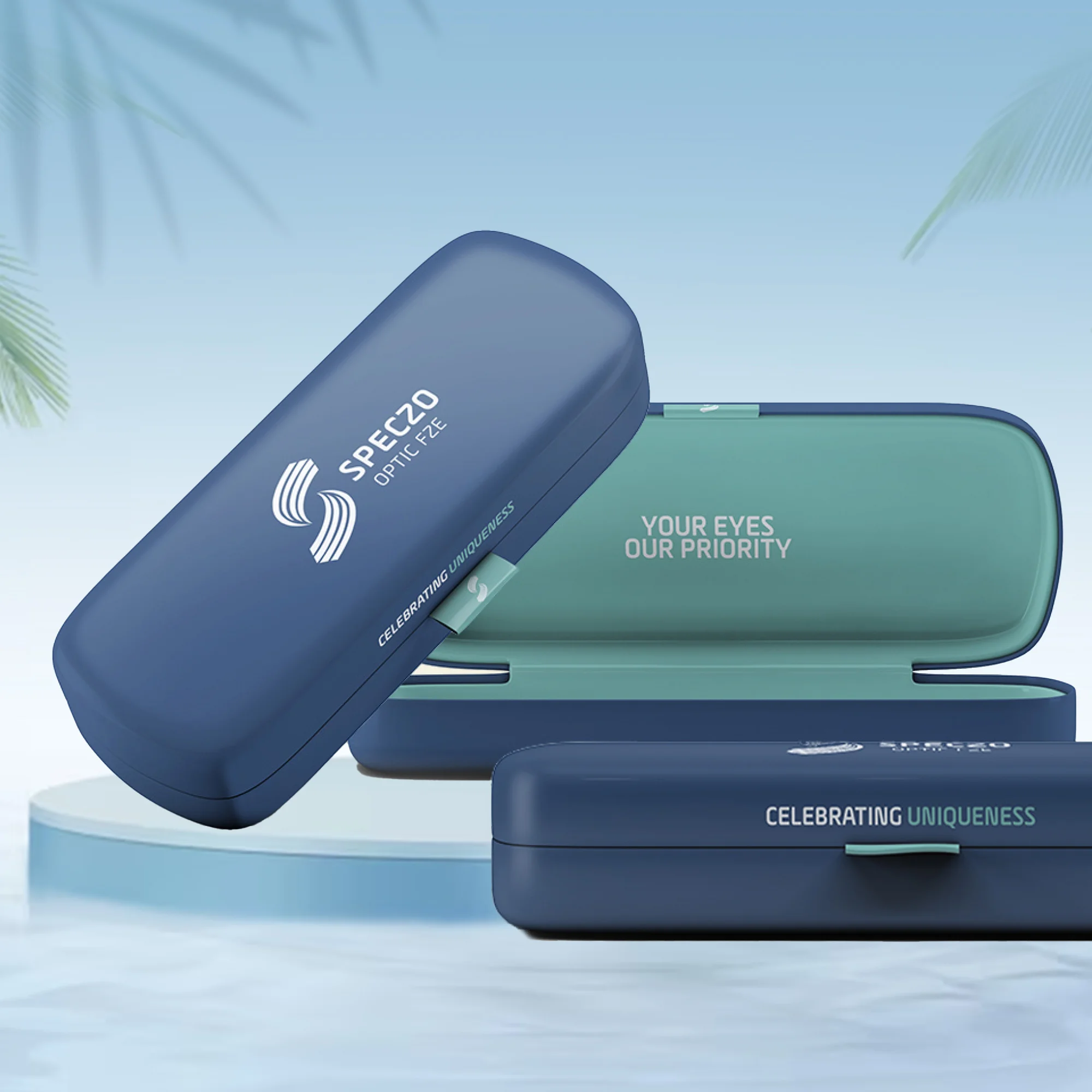
Speczo Eyewear Monolithic Identity & Packaging
Speczo sought a comprehensive visual identity and packaging system for their contemporary designer eyewear collections. We engineered custom packaging die-lines, debossed frame boxes, microfiber lens cloths, business cards, letterheads, and an integrated digital presence.

Rhyme Fine Jewels Haute Joaillerie Print
Rhyme Jewels commissioned a comprehensive print art direction and promotional creative suite. We designed macro diamond and gemstone crop layouts, seasonal jewelry discount campaigns, and daily gold rate graphic systems.
Delivering branding across Surat and globally.
Frequently Asked Questions
What is the primary difference between a logo and a brand identity?
A logo is a single graphic mark or signature symbol used to identify a business. A brand identity is the complete visual, typographic, and tonal system—including type scales, color palettes, grid rules, voice, and packaging—that defines how the entire company communicates.
Can I trademark my brand identity?
Yes. While you can trademark a standalone logo mark and wordmark, registering your brand's unique color arrangements, slogans, and distinctive trade dress provides robust legal protection against counterfeiters and imitators.
How often should an established business refresh its brand identity?
High-performing brands rarely change their core identity radically. Instead, they execute strategic visual refreshes every 5 to 7 years to modernize typographic scales, digital screen responsiveness, and digital asset libraries while maintaining core recognition.